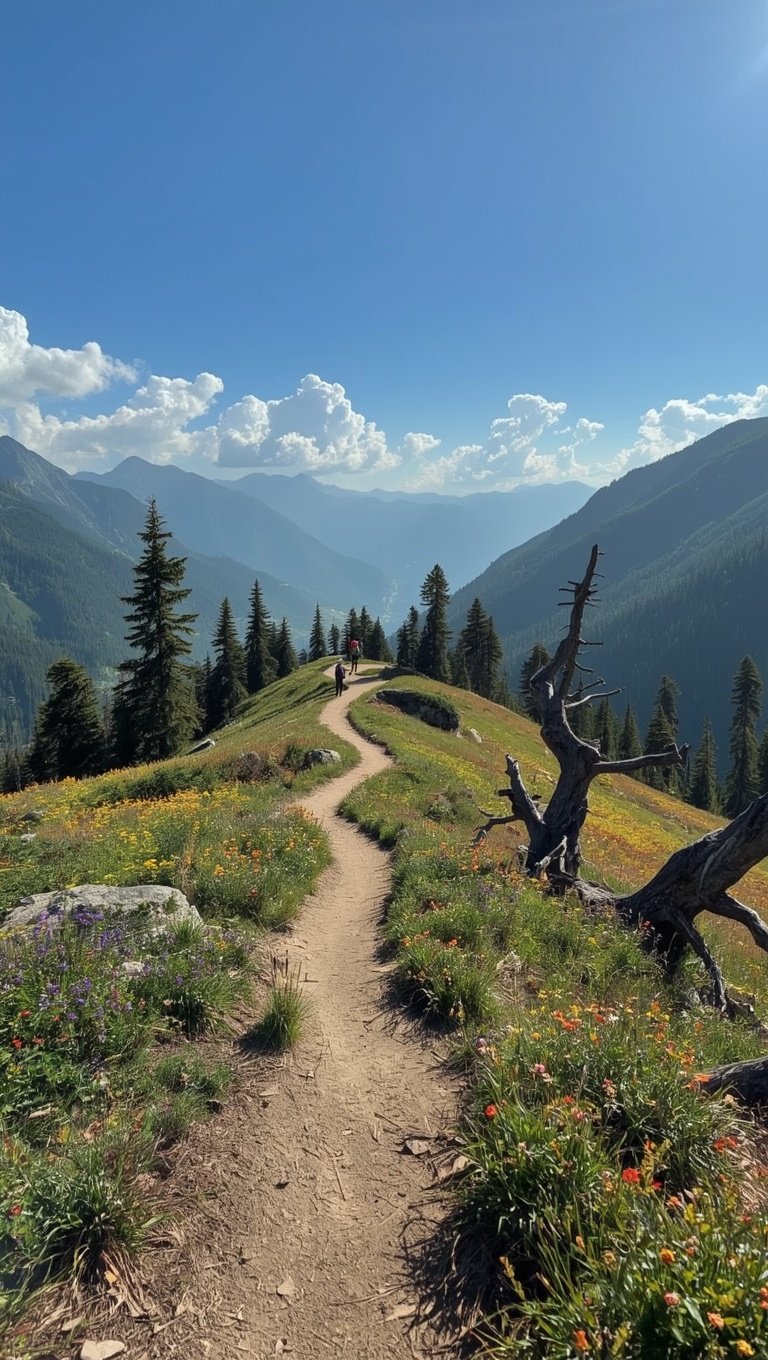

I still remember the exact spot where I almost turned around.
It was maybe a half mile in, my heart was hammering way harder than it should’ve been, my cotton t-shirt was soaked through, and I was already fantasizing about the truck’s air conditioning.
That trip nearly ended before it started, and it wasn’t because the trail was too hard.
It was because I didn’t know how to start.
So if your first mile has ever felt like punishment instead of fun, stick with me, because I’ve made every single mistake on this list.
Your Legs Aren’t the Problem, Your Pace Is

Most beginners torch themselves in the first ten minutes.
You’re excited, the trailhead smells like pine and adventure, and your body just wants to go.
But here’s the thing I had to learn the hard way.
That burst of energy is a trap.
I now start every hike at what feels like an almost embarrassingly slow pace, the kind where you could hold a full conversation without gasping.
It feels silly at first, like you’re not even really hiking.
And then twenty minutes later, when everyone who sprinted out of the gate is sucking wind on the first hill, you’re still cruising.
There’s a rhythm to it, sort of like finding your gear in a manual truck.
Too fast and you stall out, too slow and you never get anywhere.
The sweet spot is somewhere in between, and you’ll know you found it because your breathing stays steady instead of ragged.
I always tell my buddies who are new to this, if you feel great in the first mile, you’re probably going too hard.
Save that energy, because you’re going to want it later, especially on the way back down when your knees start asking questions.
Cotton Is Not Your Friend Out There

I wore a cotton hoodie on my third-ever hike and I still think about how miserable that was.
It soaked up sweat like a sponge and then just sat there, cold and heavy, against my skin the second the wind picked up.
That’s the thing nobody warns you about.
Cotton feels comfortable on the couch, but on a trail it turns into a damp, clingy mess within the first mile.
I switched to moisture-wicking layers after that trip and honestly, it changed everything.
My personal go-to now is a simple base layer, something synthetic or merino wool, with a light jacket I can tie around my waist once I warm up.
Layers are the real secret here, not one bulky jacket but a few thin ones you can add or shed as your body temperature climbs.
If I had to pick one gear upgrade for a total beginner, it wouldn’t be boots or poles, it would be this.
Your skin needs to breathe and stay dry, especially in that first mile when your body is still figuring out how hard it’s working.
A cheap wicking shirt from any outdoor store will do the job, you don’t need anything fancy or expensive to start.
Break In Your Boots Before the Trail, Not During

I learned this one the painful way, quite literally.
New boots, first real hike, and by mile one I had a blister forming that turned into a full-blown hot spot by mile three.
Boots need time to mold to your feet, and your feet need time to adjust to them too.
Now I wear any new pair around the house for at least a week before they touch dirt.
I’ll do dishes in them, walk the dog in them, whatever it takes to break them in on my own terms.
If you’re heading out in stiff, unbroken boots, that first mile is basically a warning system your feet are sending you, and it’s smart to listen.
Pay attention to any rubbing or tightness in those early minutes, because it only gets worse, not better.
I always pack a small blister kit now, just moleskin and a bit of tape, tucked into my bag’s front pocket.
It’s saved more than one hike for me and for people I’ve hiked with.
And honestly, socks matter just as much as the boots themselves.
Thick wool hiking socks are worth every penny, they cushion better and wick moisture away from your skin.
Cheap cotton socks paired with new boots is basically asking for trouble in that first mile.

🗼 I Wrote a Book About My Japan Travel Catastrophes!
Before I landed in Tokyo, I thought I was the “Final Boss” of international travel. Spoiler alert: I WASN’T. 😅
🚅 I boarded the wrong Shinkansen and ended up in THE WRONG CITY. I confused locals with my “expert” bowing that was more awkward than accurate. I accidentally stumbled into a high-stakes Kendo practice thinking it was a tourist show. Sound like something you’d do?
“Things I Wish I Knew Before Going to Japan” is your shortcut to avoiding ALL my cringe-worthy mistakes. ✨ Inside, you’ll find practical, LIFE-SAVING tips on etiquette, transport, money, and hidden gems that will save you time, money, and a whole lot of confusion.
Eat Something Before You Even Reach the Trailhead

I used to skip breakfast before hikes, thinking I’d just push through.
Big mistake.
Around the first mile mark, my energy would crash hard, and I’d feel shaky, irritable, almost dizzy.
Turns out your body needs fuel before it starts burning through elevation gain and uneven terrain.
Now I always eat something with a mix of carbs and protein about an hour before I hit the trail.
Oatmeal with peanut butter is my personal favorite, it’s simple and it sticks with you.
A banana and a handful of almonds works in a pinch too if you’re rushing out the door.
The goal isn’t to stuff yourself, just enough to give your body something to work with.
I also keep a couple of energy bars in my pack for that first-mile slump if it happens anyway.
Some mornings your body just needs a little extra, and there’s no shame in that.
Trust me, a grumbling stomach and shaky legs are not the vibe you want when you’re trying to enjoy the view.
Fuel yourself like you actually care about finishing strong, not just starting.
Hydrate Way Earlier Than You Think You Need To

Here’s a mistake I see beginners make constantly.
They wait until they’re thirsty to drink water.
By the time you feel thirsty, you’re already behind on hydration, and that first mile is where it starts catching up with you.
I sip water every ten to fifteen minutes now, even if I don’t feel like I need it yet.
It’s a small habit, but it keeps my energy steady instead of spiking and crashing.
I carry a hydration bladder in my pack rather than a bottle, mostly because it’s easier to sip without stopping.
There’s something about not having to dig for a bottle that makes you actually drink more consistently.
On hot days I’ll toss in an electrolyte packet too, because water alone doesn’t replace what you sweat out.
I learned that lesson on a summer trail where I chugged plain water and still felt off, turns out I needed sodium and potassium back in my system too.
Dehydration sneaks up on you, and it makes everything feel harder than it actually is.
Your legs feel heavier, your head gets foggy, and that first mile starts to feel like five.
Drink early, drink often, and your whole hike changes for the better.
Warm Up Before You Hit the Trail

I used to think warming up was for gym rats, not hikers.
Then I started doing a quick five-minute routine before every hike and noticed my first mile felt completely different.
Nothing fancy, just some leg swings, a few lunges, and some ankle circles right at the trailhead.
It wakes up your muscles and joints before you ask them to climb over roots and rocks.
Cold muscles are stiff muscles, and stiff muscles are the ones that cramp or strain in that first mile.
I also like to do a slow, easy first quarter mile as part of my warm-up, almost like a moving stretch.
It sounds like extra effort, but it actually saves you effort later because your body isn’t fighting itself.
Think of it like warming up a car engine on a cold morning, you wouldn’t just gun it right away.
Your body deserves that same courtesy.
A few minutes of prep can be the difference between a rough start and a smooth one.
I do this now no matter how short the hike is, because the habit itself is what matters most.
Pick a Trail That Matches Your Actual Fitness, Not Your Ego

I get it, that ambitious ten-mile trail with the epic summit view looks incredible on social media.
But if you’re new to hiking, starting there is setting yourself up for a miserable first mile and an even worse second one.
I made this mistake early on, picked a trail rated for experienced hikers because the photos looked stunning.
I was gassed by mile one and pretty much crawled through the rest.
Now I always check the elevation gain and mileage before committing, and I’m honest with myself about where my fitness actually is.
A flat, easy three-mile loop is a completely valid choice, especially for your first few outings.
There’s no trophy for suffering, and there’s definitely no shame in starting small.
Apps that show elevation profiles are your best friend here, they’ll show you exactly what you’re getting into before you commit.
I look for trails with a gradual incline rather than a steep one right out of the gate, especially for beginners I’m hiking with.
Building confidence matters more than building mileage at the start.
Once that first easy hike feels good, you’ll naturally want to push a little further next time.
Don’t Skip the Ten Essentials, Even for a Short Hike

I used to think the ten essentials list was overkill for a quick one-mile trail near my house.
Then I sprained my ankle on what was supposed to be an easy afternoon walk and realized how fast things can go sideways.
Now I carry a small kit no matter how short or familiar the trail is.
A basic first aid kit, a headlamp, extra water, a map or downloaded GPS route, and a way to start a fire if things go really wrong.
It doesn’t need to be heavy or complicated, mine fits in a small pouch I never take out of my pack.
The first mile is actually when most people decide they don’t need this stuff, because everything still feels easy and close to the car.
That’s exactly the mindset that gets people in trouble.
I like to think of it as insurance you hope you never use.
A whistle is a small addition that weighs almost nothing but could genuinely save your life if you get turned around.
I keep mine clipped right to my pack strap so it’s always within reach.
Preparedness isn’t paranoia, it’s just respect for the trail.
Test Your Gear on a Short Walk First, Not on Hike Day

I can’t tell you how many people show up to their first real hike wearing brand new everything.
New boots, new pack, new socks, all untested.
That’s basically asking your gear to fail you at the worst possible time.
I always break in and test new gear on a short neighborhood walk before it ever sees a trail.
It sounds unnecessary, but it’s saved me from blisters, chafing, and one truly uncomfortable pack strap that dug into my shoulder for miles.
Your first mile on the actual trail should feel familiar, not like you’re figuring out your equipment for the first time.
I test pack weight distribution this way too, adjusting straps until nothing bounces or pulls awkwardly.
Small adjustments feel minor at home but become major annoyances a mile into a hike.
I also wear the exact socks and shirt I plan to hike in, just to rule out any surprises.
This little dress rehearsal takes maybe twenty minutes and it’s honestly one of my favorite pre-hike rituals now.
Nothing beats stepping onto the trail already knowing your gear works for you, not against you.
🗼 I Wrote a Book About My Japan Travel Catastrophes!
Before I landed in Tokyo, I thought I was the “Final Boss” of international travel. Spoiler alert: I WASN’T. 😅
🚅 I boarded the wrong Shinkansen and ended up in THE WRONG CITY. I confused locals with my “expert” bowing that was more awkward than accurate. I accidentally stumbled into a high-stakes Kendo practice thinking it was a tourist show. Sound like something you’d do?
“Things I Wish I Knew Before Going to Japan” is your shortcut to avoiding ALL my cringe-worthy mistakes. ✨ Inside, you’ll find practical, LIFE-SAVING tips on etiquette, transport, money, and hidden gems that will save you time, money, and a whole lot of confusion.
Mind Your Mental Game From Step One

Nobody talks about this enough, but your headspace matters just as much as your legs.
I’ve started hikes annoyed, distracted, or rushing, and every single time that first mile felt worse for it.
Now I take a minute at the trailhead, just standing there, breathing, letting myself actually arrive before I start walking.
It sounds a little woo-woo, but it works.
That first mile is your body and mind syncing up, and if you rush that process, everything feels harder than it should.
I like to set a small intention before I start, nothing dramatic, just something like noticing three things I haven’t noticed before.
It shifts my focus away from discomfort and onto the experience itself.
When your mind is somewhere else, every root and rock feels like an obstacle.
When your mind is present, it just feels like the trail.
I’ve hiked the exact same route on a rushed morning and on a calm one, and they felt like two completely different experiences.
Give yourself that minute at the start, your first mile will thank you for it.
Let Your Body Acclimate If You’re Hiking at Elevation

This one caught me off guard on a trip out west, coming from sea level and hitting a trailhead at nine thousand feet.
My first mile felt like running a marathon in quicksand, my lungs just couldn’t keep up.
Elevation changes everything about how your body performs, and beginners often don’t account for it at all.
If you’re traveling somewhere higher than you’re used to, give yourself a day or two before attempting anything strenuous.
I now try to arrive at least one full day early and do an easy, flat walk first just to let my body adjust.
Drinking extra water in the days leading up helps too, altitude dehydrates you faster than you’d expect.
Pace yourself even more conservatively than usual in that first mile if you’re not acclimated, your body is working harder than it looks like it should.
Headaches, dizziness, or unusual fatigue early on are your body’s way of asking you to slow down.
I’ve learned to actually listen to those signals instead of pushing through them out of stubbornness.
There’s no medal for muscling through altitude sickness, only a ruined trip.
Respecting elevation is one of the most underrated beginner hiking tips out there.