
January is the month Iceland hands you the longest nights and the shortest days, and it’s the off-season, so whether it’s worth going is the wrong question.
The better one is how to spend a day that has somewhere between 4 and 7 hours of light in it.
Get that right and the rest, from the northern lights to the drive to the glacier, mostly sorts itself out.
January isn’t easy.
It costs you daylight.
The weather can change the plan before breakfast (honestly, it often does, so keep a spare day), and some roads are simply closed.
But it also gets you steaming hot springs and a real chance at the aurora.
Here’s how I’d plan around the parts that matter.
Daylight Runs From About 4 Hours to 7, and It Starts Late

In Reykjavik on January 1 the sun rises at 11:19 and sets at 15:43, which is about 4 hours and 24 minutes of daylight.
By January 31 it rises at 10:11 and sets at 17:11, close to 7 hours.
The days grow by roughly 2 and a half hours across the month, so the first week and the last week of January are two different trips.
That late sunrise changes how you sleep and eat.
If your flight lands before sunrise, jet lag will likely have you awake long before the sun is up.
Use it.
Have a slow breakfast.
Check road and weather conditions.
Be at the first stop when it gets light enough to see.
Nothing outdoors needs a 7 a.m. start in January, and a tour at 9 is still in the dark.
That’s the whole plan for the morning.
One big outdoor thing a day is the rule, not three.
With 4 or 5 hours of light, a waterfall plus a glacier plus a black sand beach is a race, and you spend it in the car.
Pick the one you came for.
The rest are bonuses if the light holds, which, turns out, it often doesn’t.
The Weather Sits Near Freezing, and Wind Is the Real Problem

January in Reykjavik isn’t as cold as the latitude suggests.
The long-run averages are a high of 3°C (37°F), a low of -2°C (28°F) and a mean of 1°C (34°F), based on reports from 1992 to 2021.
Wind is what makes it feel colder, and it matters more than the temperature.
Strong winds and snow, plus rain or drifting snow, can make driving difficult and sometimes dangerous, even when the roads seem clear.
So pack for a day that swings between wet and calm, and don’t count on the forecast holding past lunch.
A waterproof outer layer and a warm hat earn their space in a carry-on, no question.
If you’re deciding between seasons, our comparison of Iceland in summer versus winter lays out what changes.
January is the extreme end of winter, and it suits people who care more about lights and quiet than about long days.
Northern Lights Need Two Things, and You Can Check Both

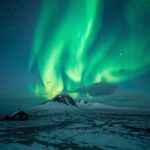
The aurora needs dark and partly clear skies.
January supplies the dark: in Reykjavik the sun is below the horizon for between 17 and almost 20 hours a day across the month.
The clear part is up to the weather, and that’s the one worth checking.
The Icelandic Met Office’s aurora page shows both numbers together.
A map of forecast cloud cover, with cloudy areas in green and clear skies in white, sits beside a forecast of auroral activity at midnight on a scale from 0 to 9.
Move the slider to the night you care about and look at where the white is.
Activity is a bonus.
It only counts where the sky is open.
A clear night is an option and a cloudy one is a night off.
If you’re driving out of the city to chase a gap in the cloud, check the road and wind before you go, because the lights aren’t worth getting stuck for.
Look, nobody remembers the drive.
When you do see them, our guide to photographing the northern lights will help you spend the minutes you have looking up and not fiddling with settings.

🗼 I Wrote a Book About My Japan Travel Catastrophes!
Before I landed in Tokyo, I thought I was the “Final Boss” of international travel. Spoiler alert: I WASN’T. 😅
🚅 I boarded the wrong Shinkansen and ended up in THE WRONG CITY. I confused locals with my “expert” bowing that was more awkward than accurate. I accidentally stumbled into a high-stakes Kendo practice thinking it was a tourist show. Sound like something you’d do?
“Things I Wish I Knew Before Going to Japan” is your shortcut to avoiding ALL my cringe-worthy mistakes. ✨ Inside, you’ll find practical, LIFE-SAVING tips on etiquette, transport, money, and hidden gems that will save you time, money, and a whole lot of confusion.
Driving: Winter Tires, Lights On and No Highland Roads

You can see a lot of Iceland by bus tour.
A rental car gives you the freedom to wait out a weather window, but it comes with rules.
Headlights must be on at all times in Iceland, front and rear.
Check that your rental has winter equipment such as winter tires before you accept the keys, because the car has to suit the trip you’ve planned.
A 4×4 helps in some winter conditions, but it doesn’t remove the risk of skidding on ice, and roads covered in snow or ice mean longer braking distances.
Leave more room than you think you need (way more).
Ice doesn’t care about your 4×4.
Conditions can change fast, so keep the road conditions map open and watch the alerts on SafeTravel, run by the Icelandic Association for Search and Rescue.
In an emergency the number is 112.
One road rule is simple.
Highland areas above 200 to 400 meters are usually snow-covered from September until May, and all highland roads are impassable during the winter.
The mountain tracks you see in summer photos aren’t an option in January.
Stay on the ring road and the main routes, and our notes on the rules that surprise Americans driving abroad are worth a read before you pick up the keys.
Ice Caves Are a Guided Tour, Not a Hike

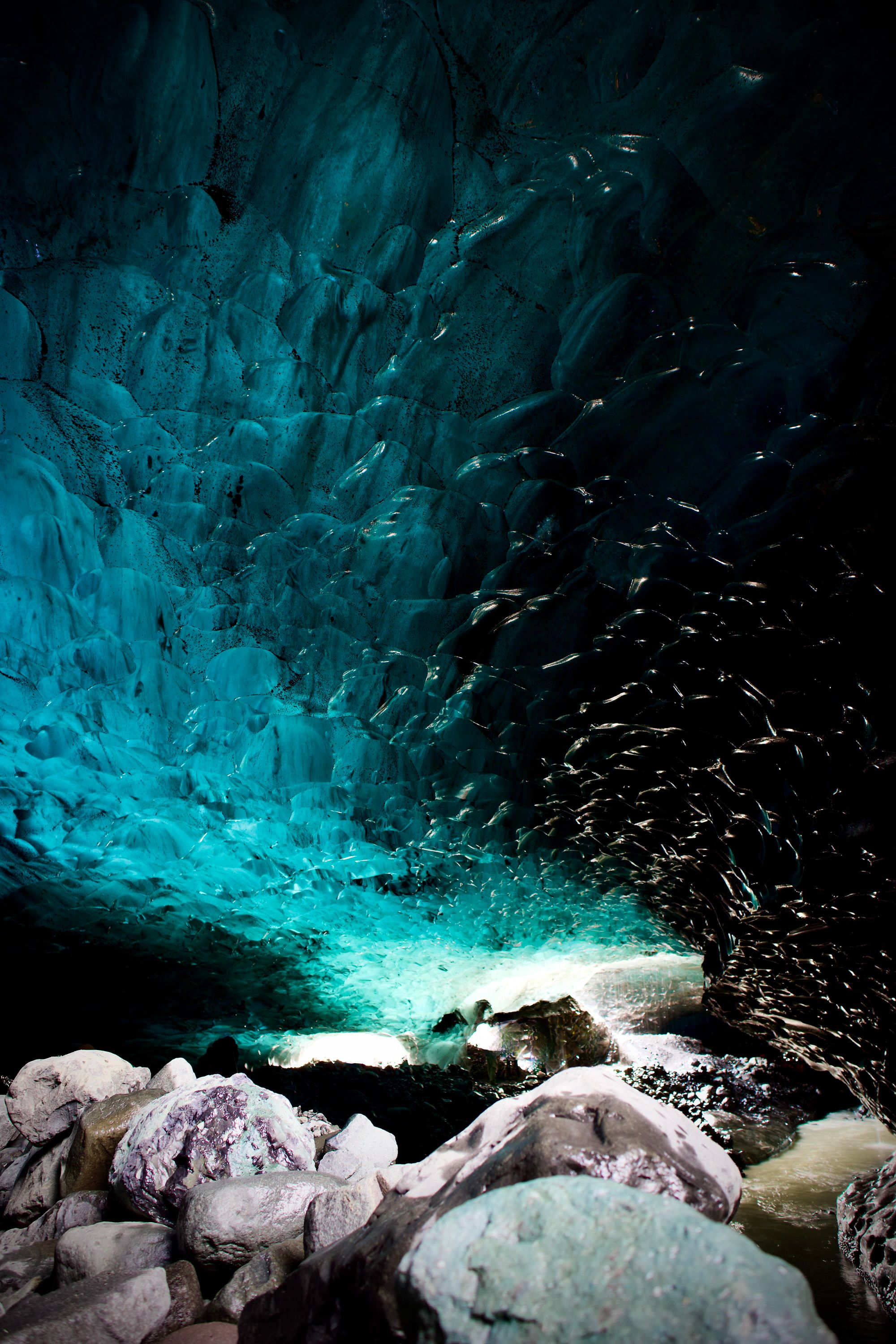
Ice caves are the thing most people picture when they think of winter in Iceland.
The season typically runs from November until May, though it shifts with temperature and weather, and the tours go to the southeast, around Vatnajökull, Iceland’s largest glacier.
Go with professional glacier guides and the right equipment.
Read the tour’s cancellation terms before you pay.
Weather can change the plan, and you don’t want the fare tied to a day you can’t use.
That’s it.
Cancellation terms are the one boring thing worth reading.
The Golden Circle and the Lagoons Are the Easy Days

Not every day in January needs to be an expedition.
Honestly, some of the best ones aren’t.
The Golden Circle is a classic for a reason: Þingvellir National Park, the steaming Geysir geothermal area and Gullfoss waterfall are the three stops on it, and each one looks different in winter scenery.
Tours and attractions generally run winter schedules, so book a spot and let someone else watch the road.
For a soak, the Blue Lagoon on the Reykjanes Peninsula and Sky Lagoon near Reykjavik are both popular, so check availability and operating conditions before you go.
A hot pool at 4 p.m., just as the light is leaving, is the best use of the worst part of the day.
I’d book it first.
If you’re still booking flights, check which US cities fly direct to Iceland first.
A direct flight skips the layover, and in January a lost day is a day with only 4 or 5 hours of light.
Who January Suits, and Who Should Pick Another Month
January suits people who want the lights, a glacier cave and a hot pool more than a big driving route.
The aurora season and the ice cave season both overlap with it, and the days are short enough that a slow breakfast doesn’t feel like a waste.
If that’s your trip, go.
Go in the last week if you can, when the day is close to 7 hours long.
Skip it if you want the highlands.
Those roads are impassable in winter, so the interior hikes and mountain tracks from summer photos simply aren’t open.
It’s also a poor fit if you’re counting on a long drive with a dozen photo stops, because the light runs out before the list does.
For that trip, a summer or shoulder-season visit is the better call, and the summer versus winter comparison will help you pick.
If you’re unsure, the cheapest way to find out is to ask what you’d do with a day that starts at 11 a.m. and ends at 4 p.m. If the answer is “one great thing, then dinner,” January is built for you.
If the answer is “see everything,” pick a different month and give the country the daylight it deserves.
A trip that fights the calendar ends with a lot of time in the car and very little to show for it.
A January Day That Fits the Light
Put it all together and a good January day has a shape (the thing is, it’s a short one).
It starts slowly, spends the light on one outdoor stop, and keeps the evening for the lights or a hot pool.
Nothing in it needs to be rushed.
The weather gets a veto on any part of it.
On the shortest days, with sunrise at 11:19 and sunset at 15:43, that means picking one stop within an hour or two of where you slept.
On the longest, near the end of the month, there’s room for two.
Either way, the evening is for the aurora forecast.
Decide at dinner whether tonight’s a night to go out or a night to stay in.
Sources: timeanddate, Reykjavik sun times; timeanddate, Reykjavik climate; Icelandic Met Office aurora forecast; SafeTravel winter driving; Visit Iceland on weather and climate; Visit Iceland, ice cave exploration; Visit Iceland, Iceland in December.