

I’ve stood in a lot of lines.
The one at the foot of the Eiffel Tower on a Saturday in July was the worst of them, and it was my own fault.
I’d booked nothing.
I showed up at 2 p.m. with a backpack and a vague plan, and I spent most of the afternoon studying the back of a stranger’s sun hat.
Truth is, the tower is one of the easier big sights in Europe to do well.
You just have to buy the right ticket and show up at the right hour.
It’s also about as busy as a monument gets.
The tower’s own site calls it one of the most visited ticketed monuments in the world, with over 6.3 million visitors a year.
So here’s what I’d tell a friend flying in this fall.
Which of the four tickets to buy.
What each one costs now, and what it costs for visits from January 11, 2027, when the new fares start.
And how to stay out of the worst of the line.
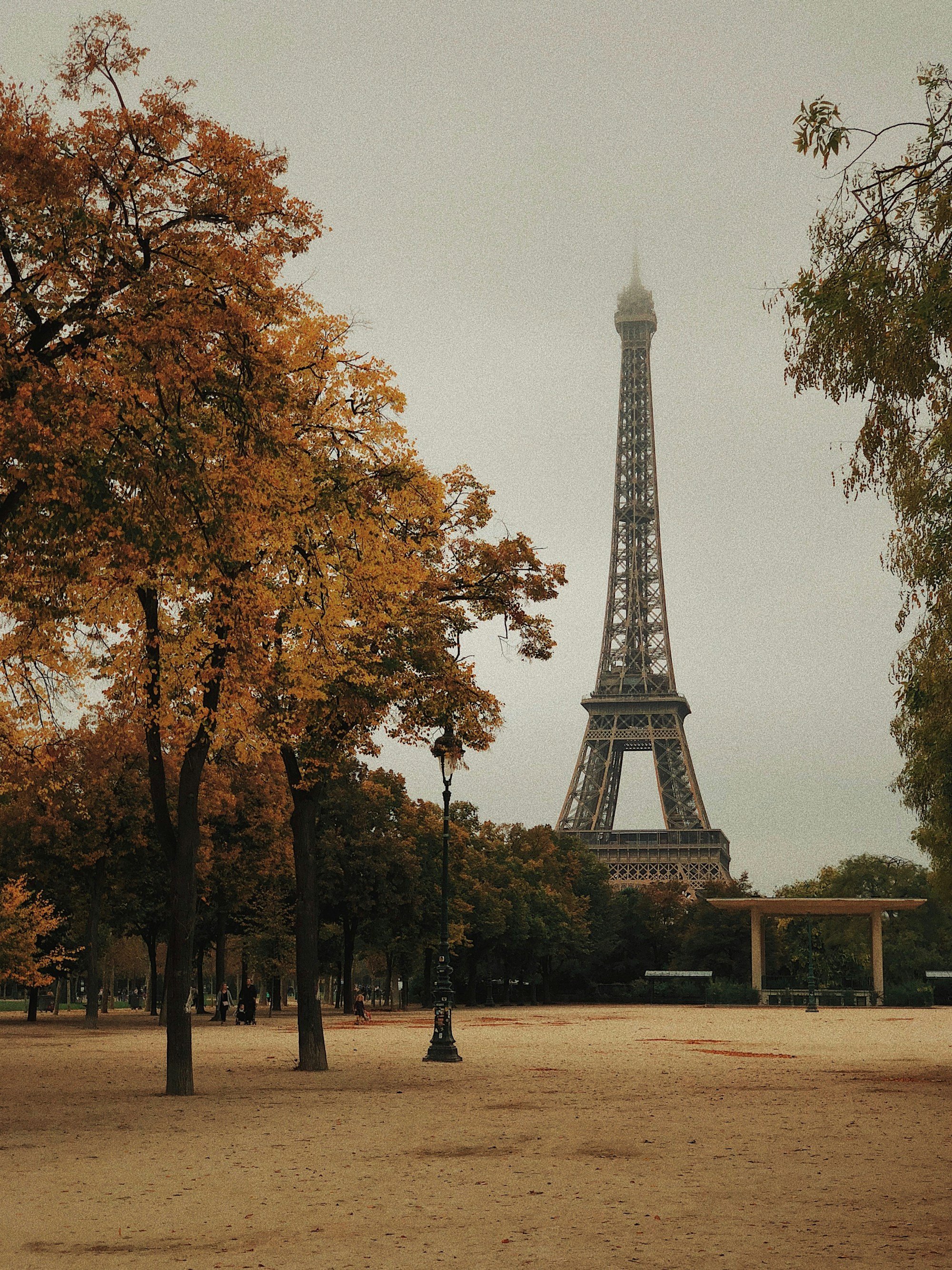
That’s the tower up top, by the way, on exactly the kind of gray autumn day I’d pick.
The top is in the clouds.
I’ll come back to that, because it matters for which ticket you buy.
The Four Tickets, and Which Floor Each One Gets You To

The tower has three levels you can stand on, and you can see two of the platforms clearly in that photo.
The first floor is 57 meters up, about 187 feet.
The second floor is at 116 meters, or 381 feet.
Up top you’re at 276 meters, roughly 906 feet above the gardens.
Every ticket picks one of two destinations: the second floor or the top.
The first floor comes with both.
You go up to your highest level first and work your way down, so you’ll pass through it on the way out either way.
Then there’s how you get up.
Lift or stairs.
That makes four tickets.
Here’s what an adult pays this year, next to what the same ticket costs for visits from January 11, 2027.
In plain numbers: the second floor by stairs is €14.80 now and €15.20 next year.
The second floor by lift is €23.50, going to €24.10.
The top by stairs and then lift is €28.00 (€28.80 in 2027), and the top by lift all the way is €36.70, going to €37.70.
If you’re between 12 and 24, you pay about half, so €18.40 for the top by lift.
Kids from 4 to 11 pay €9.20 for that same ticket.
Under 4 is free, though even a baby needs its own free ticket.
Notice what’s missing from that list.
There’s no cheap upgrade.
If you buy the second floor and then decide on the platform that you want the summit after all, you’re out of luck.
The tower’s FAQ is blunt about this: you choose your destination when you buy, and no extra ticket to the top is sold at the tower.
The Stairs Are the Best Deal on the Tower

Hot take: if your knees work, take the stairs.
From the ground to the second floor is 674 steps, in two stretches of 327 and then 347.
The official ticket page says to allow 15 to 20 minutes per floor.
You climb the south pillar in the open air, inside the ironwork you see in that photo, and Paris slowly shows up between the girders as you go.
You come back down by a different staircase, so you get two sets of views for one ticket.
Climbing saves you €8.70 on the second floor.
That’s about 37% off the lift price (paid for in sore calves, but still).
Bigger win: the line.
Stairs tickets are sold at their own blue kiosk, the stairs go up the south pillar, and the tower’s FAQ says the wait at the stairs counters is always shorter than the wait for the lifts.
Their ticket page goes further and says there’s always room on the stairs, which is not a promise I’ve heard about anything else in Paris.
I did the climb on my second trip.
The first floor landing is a perfectly good place to pretend you’re admiring the view while you catch your breath.
Nobody judges.
A few warnings.
The stairs aren’t open to anyone with reduced mobility, and the tower strongly discourages them for anyone with heart trouble.
Bringing a baby?
Take the lift.
There’s nowhere to leave a stroller.
Stairs tickets go on sale online 60 days ahead and come with a time slot, same as the lift tickets.
In some periods the stairs close at 6 p.m., so don’t count on a late climb.
And you can’t climb past the second floor.
There are 1,665 steps from the esplanade to the top in total, but the stretch above the second floor is closed to the public for safety.
From there it’s a lift or nothing.
Going to the Top: Two Lifts, or Stairs Then One

Most of the money goes on the top.
It’s also the ticket that sells out first.
Lift tickets go on sale online up to 90 days ahead.
For June through September, the tower says to book as early as you can.
The same goes for school breaks and public holidays.
A top ticket by lift really means two lifts.
The first takes you from the ground to the second floor.
Then you switch to a different lift for the summit, your ticket gets scanned again, and depending on the day you might wait a bit for that second ride.
Here’s the sneaky one: stairs plus lift.
You climb the 674 steps to the second floor, then ride the rest of the way up, for €28.00 instead of €36.70.
That’s about 24% less.
The tower sells these mostly at the ticket office on the day, with only very small numbers online, and its own FAQ calls them a smart, cheaper way to the summit when the lift tickets are gone.
Honestly, the lift photo above is why some people happily pay full price.
Watching a car like that crawl up through the iron is half the fun.
Plan your time, too.
The tower suggests at least 1.5 hours for a visit to the first and second floors, and 2.5 hours if you’re going to the top.
You’ll also see one more upsell: the top by lift with a glass of champagne at the summit bar, €60.70 for an adult.
I’m not going to tell you how to live.

🗼 I Wrote a Book About My Japan Travel Catastrophes!
Before I landed in Tokyo, I thought I was the “Final Boss” of international travel. Spoiler alert: I WASN’T. 😅
🚅 I boarded the wrong Shinkansen and ended up in THE WRONG CITY. I confused locals with my “expert” bowing that was more awkward than accurate. I accidentally stumbled into a high-stakes Kendo practice thinking it was a tourist show. Sound like something you’d do?
“Things I Wish I Knew Before Going to Japan” is your shortcut to avoiding ALL my cringe-worthy mistakes. ✨ Inside, you’ll find practical, LIFE-SAVING tips on etiquette, transport, money, and hidden gems that will save you time, money, and a whole lot of confusion.
There’s No Such Thing as a Skip-the-Line Ticket

This one drives me nuts.
Search for tickets and you’ll see “skip the line” and “priority access” everywhere, usually for a lot more than the official price.
Even the tower’s FAQ says it flat out: there is no such thing as a skip-the-line ticket for the Eiffel Tower.
Those resellers sell you what the official e-ticket gets you, and nothing more.
It gets worse.
Fake sites posing as the real one are now being promoted on search engines and AI platforms, according to a warning on the official site.
The only official shop is ticket.toureiffel.paris, and the prices there are the same as at the ticket windows.
What the e-ticket actually does is skip the ticket office queue, and there are separate lanes for e-ticket holders at security and at the lifts.
You still go through security.
Everyone does.
So here’s the drill on the day:
- Get there half an hour before the time on your ticket. The security check at the entrance takes 10 to 20 minutes.
- Bring ID for everyone in your group, kids included. Each e-ticket is personal.
- Show the ticket as a PDF with your screen brightness turned all the way up. Wallet apps aren’t accepted.
- Leave the big bag at the hotel. Large luggage isn’t allowed in the tower, and there’s no left-luggage desk.
That last one catches people coming straight off an overnight flight with a rolling carry-on.
Drop the bag first.
Your jet lag can come along.
And the time on the ticket is fixed.
Once you’ve paid, the date and time can’t be changed, and there are no refunds.
When the Line Is Shortest

Handily, the tower publishes a rough guide to its own crowds by time of day.
It lines up with everything I’ve seen there.
Mornings from 9 to 11 a.m. are quieter.
From 11 a.m. to 5 p.m. is the crush.
It eases to medium from 5 to 8 p.m., and from 8 to 10:30 p.m. it’s quiet again.
The last lift to the top leaves at 10:30 p.m.
My pick is the evening, like that dusk shot from across the river.
The tower is lit up and sparkles on the hour, and the official guide itself says there are fewer visitors at night.
Just don’t cut it close at the ticket office.
For the top, the ticket windows close around 1 hour 45 minutes before the tower does, and the tower asks walk-up visitors to arrive at least 2 hours before closing.
Right now, in late October, the tower is open from 9:30 a.m. to 11 p.m. Hours shift through the year, so check the calendar on the official site for your date.
November Is the Off-Season, and It Shows

I’d rather see the tower in November than in July.
Off-season Paris is gray and damp.
It’s also calmer, and the pressure on tickets is in June through September, not now.
But there’s a catch, and it’s in that photo.
On a foggy day the top is inside the cloud.
You can pay €36.70 to stand in a cloud at 906 feet.
Summit access can also close.
The official calendar says access to the top may be restricted in bad weather or at peak times.
If the forecast says fog, I’d buy the second floor.
It’s lower and cheaper, and on a murky day you lose less.
Dress for wind.
The tower’s own site prints the same line under each day’s forecast: it’s always windy on the third floor, so wrap up.

Bring a hood or a small umbrella for the walk and the wait at security, too.
A wet November afternoon on the Champ de Mars feels long.
One more off-season detail.
Anything you book for a visit before January 11, 2027 is at this year’s prices.
From that date the new fares apply, and the top by lift goes up by a euro.
You Don’t Need a Ticket to Stand Under It

Here’s the free version, and plenty of people should just do this.
Walking the gardens and the esplanade under the tower costs nothing.
You still go through security at entry 1 or entry 2, in the queue for visitors without tickets, and then you can walk right under the legs and look straight up at that.
It’s not free on the first Sunday of the month, by the way.
That rule is for national museums, and the tower says plainly that it doesn’t apply.
So which ticket?
Here’s how I’d decide.
If I had one morning, I’d take the stairs to the second floor at 9:30 and be back on the ground before the 11 a.m. crowd builds.
Then I’d walk the climb off with a coffee.
My notes on Paris café culture cover where to sit and what to order.
If you’re working the tower into a bigger day, the one-day Paris itinerary has a route.
For everything else, start with the Paris travel guide.