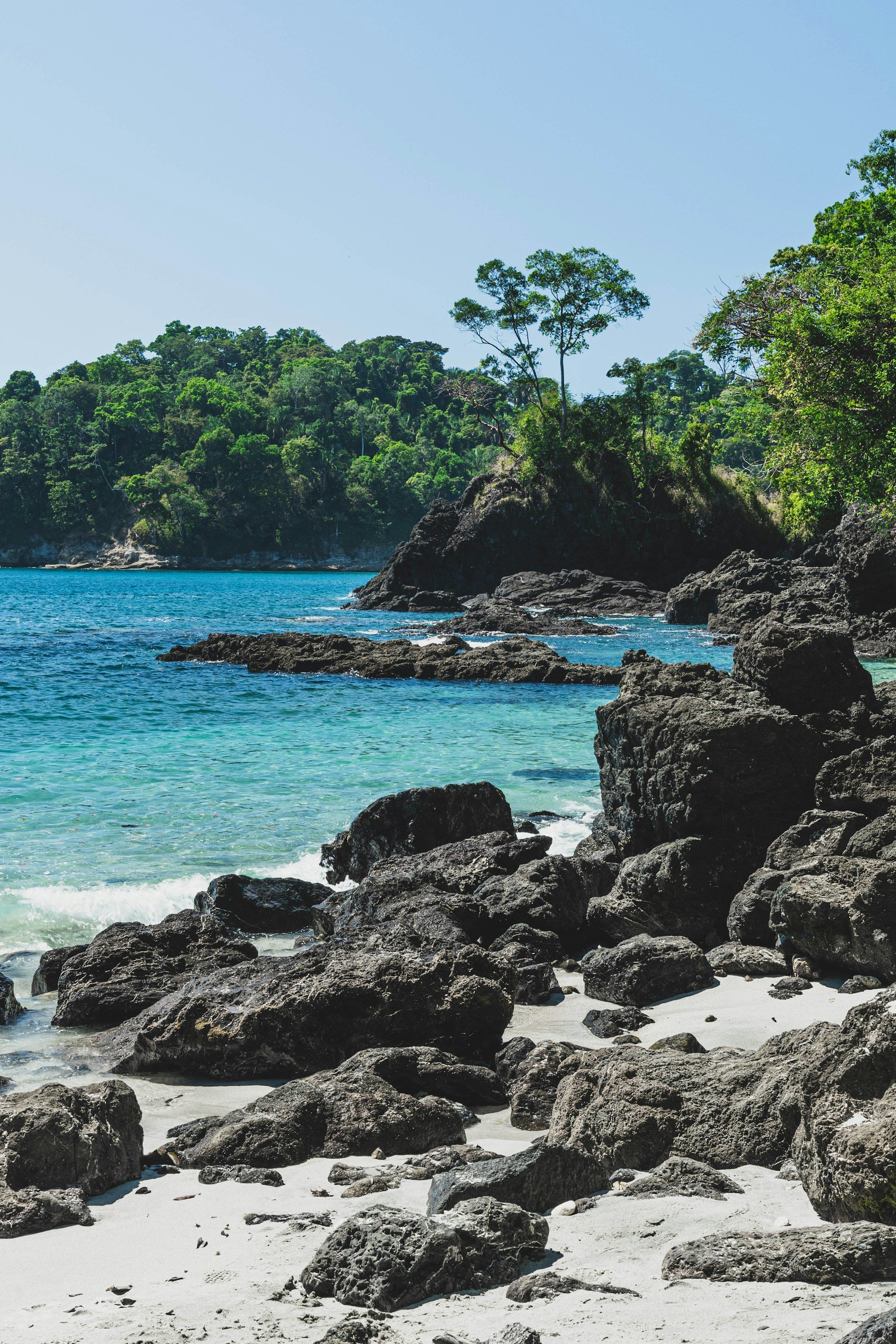


December is the month Costa Rica flips.
The rain eases off on the Pacific side, the dry season starts, and the whole country gets busy at the same time: Americans running from winter, and Costa Rican families starting their own long summer break.
The first time I booked it, I picked the wrong coast.
I’d read “dry season starts in December” and assumed that meant the whole country.
It doesn’t.
One side of Costa Rica is nearly rainless this month, and the other side is having one of its wettest months of the year.
They’re a few hours apart by car.
So here’s what the weather really does on each coast, which airport to fly into, and the December dates that fill up the hotels.
December Weather, Coast by Coast

Climates to Travel keeps monthly averages for Costa Rica’s main towns, and I’ll use their December numbers, converted and rounded, because nobody needs decimals on vacation.
- Liberia (Guanacaste, northwest): highs around 91°F, lows around 70°F, about 0.4 inches of rain over 2 days, 8 hours of sun a day.
- San José (Central Valley): highs around 81°F, lows around 66°F, about 1.6 inches over 4 days.
- Puntarenas (central Pacific): highs around 90°F, lows around 72°F, about 1.2 inches over 6 days.
- Quepos (Manuel Antonio): highs around 88°F, about 6.1 inches over 15 days.
- Limón (Caribbean): highs around 84°F, about 17.5 inches over 18 days.
Read that list top to bottom and the pattern jumps out.
The northwest is dry.
The capital is mostly dry.
The further south you go on the Pacific, the more it rains, and the Caribbean side is soaked.
The sea is warm everywhere they measure it, around 82°F.
Guanacaste Is the Safe Bet (Hold Onto Your Hat)

If December is your only window and you want sun, go northwest.
Climates to Travel says there’s a well-defined dry season from December to April, at least in the northern part of the Pacific coast, and it names December and January as the best months for the northwest.
Two rainy days out of 31 in Liberia is hard to beat.
The catch is wind.
The same source says a hot, dry wind called the Papagayo often blows during this stretch.
On the beach it’s mostly a relief from the heat.
On a boat, or on a dirt road with the windows down, it’s a lot of dust in your teeth.
I bring a cheap buff for my face and stop fighting it.
And respect the heat.
Highs around 91°F with that much sun means the beach is a morning thing and a late-afternoon thing.
Midday is for shade, a cold drink and a nap, which is what everyone local is doing anyway.
I got that backward on my first day and spent the second one hiding from the sun with a burn on my shoulders.
Guanacaste is beach country: Tamarindo, Playa Hermosa, the Nicoya Peninsula further south.
If you land in Liberia with a free day before the beach, I listed the stops worth it in things to do in Liberia, Costa Rica.
Your Ultimate Caribbean Adventure Awaits!
Discover hidden coves, secret beaches, and the best rum punches in the islands. Your insider’s guide to Caribbean paradise.
Get Your Guide Now$15.99Manuel Antonio and the South Pacific: Drier, Not Dry


Here’s where “dry season” starts to mislead people.
Quepos, the town next to Manuel Antonio National Park, averages about 6.1 inches of rain over 15 days in December.
That’s half the month.
Climates to Travel explains why: the dry season gets shorter as you go south, and it still rains fairly often in December down there.
For the southwest it suggests January to mid-April instead.
I’d still go.
Manuel Antonio in December is green, the sloths don’t care about a shower, and on my trip the rain came as afternoon storms that blew through rather than gray days.
Just plan the park for the morning, keep the afternoon loose, and pack a rain jacket you don’t mind getting muddy.
Be at the park gate early, too, because the line builds fast once the tour vans arrive.
The Caribbean Side Is the Exception

This is the one people miss.
On the east coast, Climates to Travel says December is the wettest month, with July, at about 440 millimeters of rain.
Its Limón table shows about 17.5 inches over 18 days.
That’s not a few afternoon showers.
Puerto Viejo and Cahuita are some of my favorite places in the country, and I still wouldn’t build a December beach trip around them.
If the Caribbean is the point of your trip, the same source suggests February and March.
If you’re already in San José and want to see it anyway, give it two nights, not a week, and keep a backup plan that doesn’t need sun.
Arenal and Monteverde: Cooler, Windier, Bring a Layer


Most first trips pair a beach with a volcano or a cloud forest, and December is a fine month for both.
Just don’t pack like it’s all beach.
Arenal is the easier of the two.
La Fortuna sits at the foot of the volcano, the town is full of hot springs, and a rainy evening is a lot easier to take when you’re sitting in warm water.
If clouds hide the cone on your first morning, don’t panic.
Give it another sunrise before you decide you’ll never see it.
Tourist in Monteverde, a local guide site, puts dry-season days in Monteverde at 72 to 79°F and nights at 55 to 63°F. It also says Monteverde is known for strong seasonal winds, especially from late December through February, and that you shouldn’t leave the rain jacket at home, because it’s a cloud forest, after all.
I wore every layer I’d brought on a 6 a.m. bird walk there and was still cold.
Getting between the two takes longer than the map suggests.
Lonely Planet puts La Fortuna to Monteverde at 183 km (114 miles) around Lake Arenal and says to allow three and a half hours, with the last stretch on steep, winding dirt road where a 4WD is ideal.
If you’re not renting one, the shuttle-and-boat combo across the lake is the easier way, and it cost me less than a day of 4WD rental would have.
Caribbean Paradise Unlocked
From pristine beaches to vibrant local culture, discover the Caribbean’s best-kept secrets with my comprehensive travel guide.
- 120+ Hidden Beach Secrets
- Local Cuisine Guide
- Budget Travel Tips
- Island Hopping Routes
Fly Into Liberia or San José?

Costa Rica has two big international airports: Juan Santamaría (SJO) outside San José and Daniel Oduber Quirós (LIR) in Liberia.
Which one you want depends on where you’re sleeping the first night.
Guanacaste beaches?
Fly into Liberia.
You skip the capital’s traffic and you’re on the sand the same afternoon.
Arenal, Monteverde, Manuel Antonio or the Caribbean?
San José is usually closer.
Lonely Planet puts San José to La Fortuna at 130 km (81 miles) and tells you to allow three and a half hours.
Going from Liberia down to Santa Teresa, at the tip of the Nicoya Peninsula, is 265 km (165 miles), around six hours.
Distances look small here and drives don’t.
My usual move for a first trip is an open-jaw ticket: fly into one airport and out of the other, so you never drive the same road twice.
Price it both ways before you pick.
To see how long the flight is from your own city, try our flight time to Costa Rica tool.
Holiday Weeks Book Up First
December has two trips in it.
Early December is the dry season with room to breathe.
The last two weeks are the busiest of the year.
Costa Rica Experts, a Costa Rica tour company, calls Christmas and New Year’s the busiest travel weeks of the year in the country and says the most popular resorts, eco-lodges and villas are usually booked out by October.
Part of the reason is local.
Costa Rica’s Ministry of Education ends the 2026 public school year on December 9, so from mid-December the beaches fill up with Costa Rican families too.
Costa Rica Experts also says Christmas Eve, December 24, is for big family dinners, and on the 25th families head to the beach or the mountains.
Then New Year’s Eve on December 31 tops off the busiest two weeks.
One date worth knowing if you’re in San José: the Festival de la Luz, the city’s big Christmas parade, is on December 12, 2026, according to Teletica.
This year’s route starts at Plaza de la Democracia and ends at Torre Mercedes on Paseo Colón. La Teja reports there won’t be any floats this time, only marching bands, which honestly is the part I always liked anyway.
Booking now, in November?
Look at the first two weeks of December, when the weather’s already turned and the holiday rush hasn’t.
If you need Christmas week, book the room before you book anything else, then the car, then the flights.
Rental cars for the holiday weeks go fast too.
I learned that standing in the line at a rental desk on December 23, listening to the agent say “sold out” to the couple in front of me.
Paperwork and What Goes in the Carry-On

Costa Rica’s tourism board lists what immigration can ask for when you land.
A return or onward ticket is the big one: a flight, a bus ticket out of the country or proof of a cruise all count.
The officer can also ask you to show you have money for your stay, at least $100 a month, and the officer decides how long you can stay when you arrive.
The board also says to carry a photocopy of your passport with the entry stamp at all times.
Rules change, so check the official immigration site before you fly.
For December, my carry-on looks like this:
- A light rain jacket, even for Guanacaste, because you’ll end up in a forest at some point.
- A fleece or a long-sleeve layer for Monteverde and Arenal nights.
- A buff or bandana for dusty roads and the Papagayo wind.
- Sunscreen, a hat and shoes that can get wet.
- A printed copy of the onward ticket and that passport photocopy.
There’s no jet lag to speak of, either.
Costa Rica doesn’t change its clocks, so in December it’s one hour behind New York.
That alone makes it an easy December trip.
If this is your first time and you’re still building the list, start with my things to do in Costa Rica and cut it down to one coast.
Related read: The Caribbean Travel Guide — Instant PDF + Kindle download. Secure checkout by Stripe