Short answer: yes, if you want Gulf beaches, a slower pace, mild winters and a job tied to the military, a university or tourism.
Take hurricanes and insurance seriously, though.
Michael in 2018 was a Category 5 at landfall near Mexico Beach, and the cost of insuring a home near the water is the first thing I’d price.
The Panhandle is a good place to live with your eyes open.
It isn’t the cheap, carefree beach life the brochures sell.
I rewrote this page in October 2026.
The old version was mostly cheerleading and had housing prices nobody could trace.
So here’s what’s actually true, and where you’d want to look harder before you move.
What “the Panhandle” means
It’s the strip of northwest Florida, about 200 miles long, with Alabama to the west and north, Georgia to the north and the Gulf to the south.
Pensacola is at the west end.
Tallahassee, the state capital, is the biggest city.
In between are Navarre, Fort Walton Beach, Destin and Panama City Beach.
About 1.54 million people lived there at the 2020 census, which is under 7 percent of Florida’s population, so it’s far less crowded than the rest of the state.
One quirk you’ll notice the first week: the ten counties west of the Apalachicola River run on Central Time.
The rest of Florida is on Eastern.
So Pensacola is an hour behind Tallahassee.
Gulf County is split between the two.
The good parts
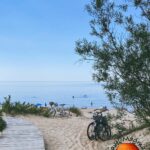
Beaches you can actually live near
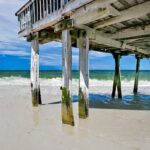
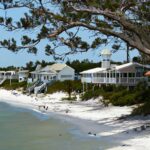
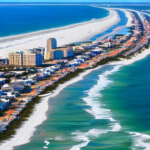
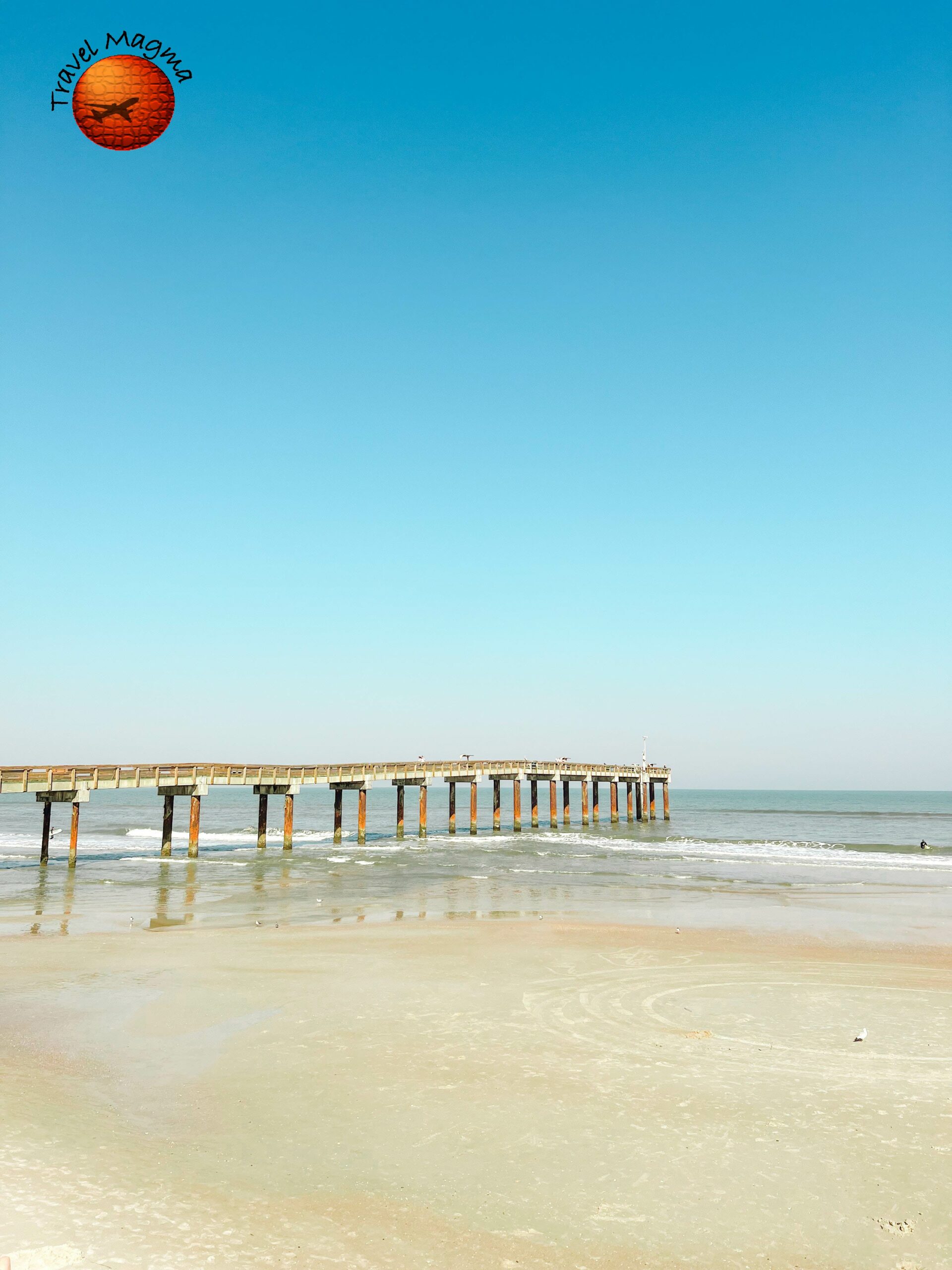
The coast from Pensacola to Port St. Joe got the name Emerald Coast back in 1983, and the barrier islands of Perdido Key and Santa Rosa Island run all the way to Destin.
If you’re picking a town for the beach, our list of the best small beach towns in the Panhandle is a good place to start.
Real winters (mild ones)
This isn’t South Florida.
Pensacola’s January daily average is about 53°F, and it gets around 11 freezes in a typical winter.
Snow is rare but not impossible.
On January 21, 2025, the city got up to 9.4 inches, a record.
Summers are hot and humid, with highs in the lower 90s°F and afternoon thunderstorms.
If you want seasons without shoveling, honestly, that’s a decent trade.
No state income tax
Florida is one of eight states that don’t tax personal income.
For a working household moving from a high-tax state, that’s real money every month.
Just don’t count it as profit until you’ve priced insurance (more on that below).
Steady employers
The military is the backbone here.
Naval Air Station Pensacola trains the Navy’s, the Marine Corps’ and the Coast Guard’s new aviators and is home to the Blue Angels.
Eglin Air Force Base, near Valparaiso, hosts the Air Force’s 96th Test Wing.
Tyndall Air Force Base, near Panama City, is being rebuilt after Michael and was picked as the new home of an F-35A mission.
At the other end, Tallahassee is a government and college town, with Florida State, Florida A&M and more than 70,000 students.
Your Ultimate Caribbean Adventure Awaits!
Discover hidden coves, secret beaches, and the best rum punches in the islands. Your insider’s guide to Caribbean paradise.
Get Your Guide Now$15.99The hard parts
Hurricanes are not hypothetical
Pensacola alone has had Ivan (2004), Dennis (2005) and Sally (2020) make landfall at or near it.
Ivan’s surge knocked 58 spans off the I-10 Escambia Bay Bridge and destroyed more than 10,000 homes in the metro area.
Then there’s Michael, in October 2018.
It came ashore near Mexico Beach as a Category 5 with 160 mph winds, the first Category 5 on record to hit the Panhandle, and Mexico Beach and Panama City took catastrophic damage.
Air Force officials called the damage at Tyndall “catastrophic” and put the bill at $4.7 billion.
That doesn’t mean don’t move here.
It means: know your evacuation zone, buy a house that’s built to the newer codes, and keep a plan for the week the power is out.
Insurance is the hidden cost
Most homeowners insurance doesn’t cover flood damage.
That’s FEMA’s line, not mine, and on a coast with storm surge it matters.
You’d need a separate flood policy, and you’ll want to see what wind coverage costs on that address too.
Get real quotes on the exact address before you make an offer — and definitely before you’ve booked the movers.
Not after.
I’d put this ahead of the price tag when you compare towns, because a cheap house with a brutal premium isn’t cheap.
It’s rural once you leave the coast
Inland, the Panhandle is small towns and long drives, with a culture closer to Alabama and Georgia than to Orlando or Miami.
Some people move here for exactly that.
Others find it isolating, especially without a car.
Where to look, by what you want
- A city, with jobs outside the beach economy: Tallahassee. It’s the capital and has the universities, though it’s inland, not a beach town.
- Beach life with a real downtown: Pensacola, the largest city west of the Apalachicola, in a metro of about 511,500 people.
- Military families: the towns around Eglin, starting with Valparaiso, or the ones near NAS Pensacola.
- Quiet: the Forgotten Coast, from Mexico Beach east to St. Marks. Fewer people, and you’ll drive for most things.
Try it before you buy
Spend a week here in August and a week in January before you commit.
August shows you the heat and the storm season.
January, the off-season, shows you what the beach towns are like when the tourists are gone.
You’ll find out whether the places you liked stay open, and how far you really drive for groceries.
If you still like it in both, you’ll probably like living here.
More on Pensacola, Panama City and the towns between them is in our Florida Panhandle guide.