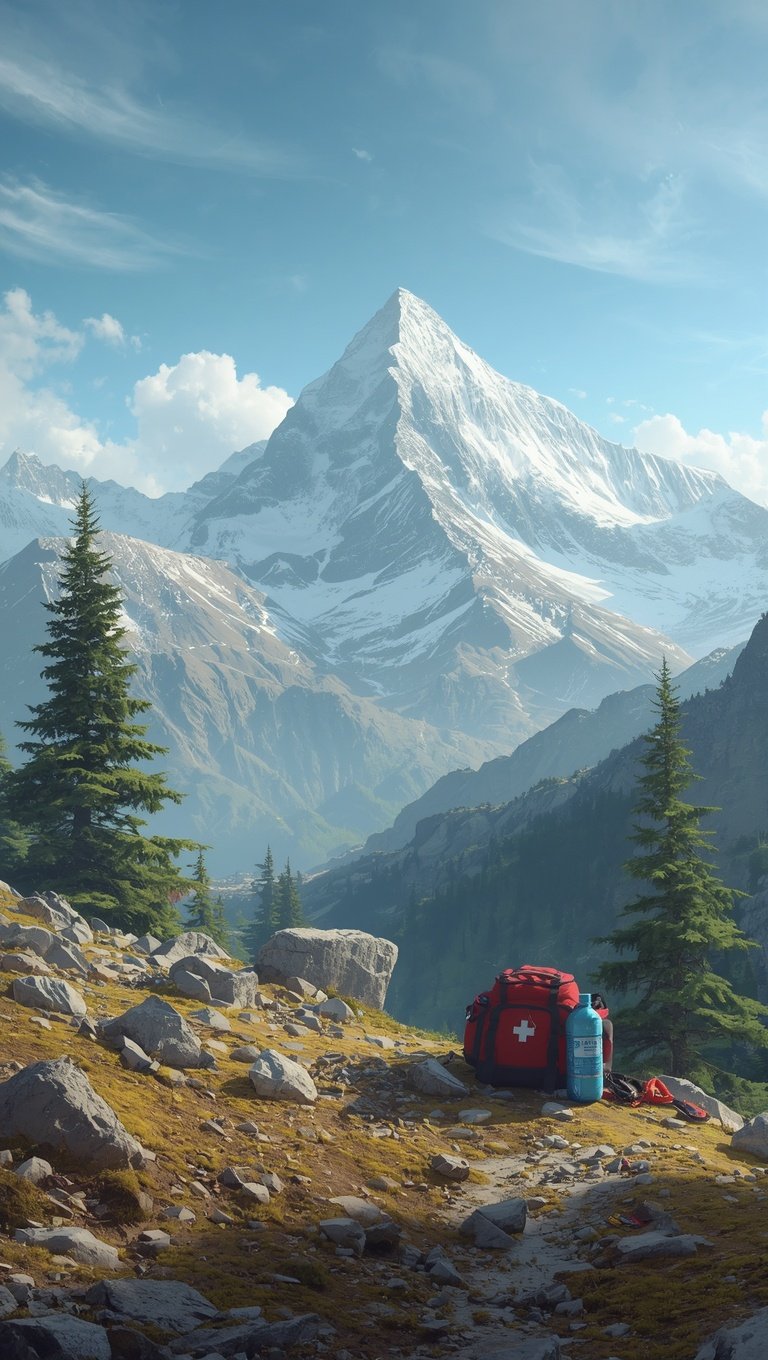

I threw up on the side of a trail at 14,000 feet and had to sit down right there in the dirt.
That was my wake-up call, man.
I’d trained for months, I was in the best shape of my life, and none of it mattered because altitude doesn’t care about your gym schedule.
So if you’re planning a high trek and you’re a little nervous about how your body’s going to react, good.
That fear means you’re paying attention, and paying attention is exactly what saved my next ten climbs.
What Altitude Sickness Actually Feels Like

Nobody really tells you what it feels like until you’re in it.
For me it started as a dull headache, the kind you’d normally just shrug off.
Then came the nausea, this heavy, seasick feeling that wouldn’t go away no matter how much water I drank.
My hands felt kind of swollen, and I remember thinking that was weird, almost funny, until it wasn’t funny anymore.
By the time I felt genuinely foggy, like I couldn’t do basic math, I knew something was off.
That’s the sneaky part.
Altitude sickness doesn’t hit you like a truck.
It creeps in slow, and it whispers instead of shouts.
So my biggest tip, right off the bat, is to stop treating a headache above 8,000 feet as “just a headache.”
Treat it as information.
Your body is talking to you, and up there, you’ve gotta listen.
I’ve seen tough guys, stronger than me, get taken down by this because they ignored the first signs.
Don’t be that guy.
The Golden Rule: Ascend Slowly
If I could tattoo one rule on every hiker’s arm, it’d be this one.

Slow down.
I know, I know, it sounds boring when you’re excited and the summit is right there calling your name.
But the general guideline I live by is no more than 1,000 feet of sleeping elevation gain per day once you’re above 10,000 feet.
That single habit changed everything for me.
On my Kilimanjaro attempt, I chose a longer route specifically because it gave my body more days to adjust.
People thought I was crazy for adding extra days to my trip.
I wasn’t crazy, I was just tired of getting sick.
And honestly, walking slower let me actually enjoy the scenery instead of racing through it with tunnel vision.
There’s a saying up there: climb high, sleep low.
It means push your daytime altitude a bit, then come back down to sleep.
It sounds inefficient, but it works.
Your body adapts so much better this way.
So if you’re planning your itinerary right now, build in buffer days.
Future you will be so thankful.
Your Ultimate Caribbean Adventure Awaits!
Discover hidden coves, secret beaches, and the best rum punches in the islands. Your insider’s guide to Caribbean paradise.
Get Your Guide Now$15.99Hydration Is My Non-Negotiable
I used to think drinking water was just a general “healthy person” tip.

Turns out at altitude, it’s survival gear.
Dry mountain air pulls moisture out of you faster than you’d ever guess, and dehydration mimics altitude sickness symptoms almost exactly.
So now I carry a hydration bladder plus a bottle, no exceptions.
My rule of thumb is at least 4 to 5 liters a day once I’m above 10,000 feet.
I add electrolyte tablets too, because plain water alone isn’t cutting it when you’re sweating that much.
On my Everest Base Camp trek, I watched a guy get evacuated, and our guide said dehydration was a huge part of it.
That stuck with me.
I check my urine color like it’s a science project now, and I’m not even embarrassed to admit it.
Pale yellow means I’m good.
Anything darker and I’m chugging water at the next stop.
It’s such a simple habit, but it’s saved my trips more than once.
If you remember nothing else from this post, remember to drink more than feels necessary.
Your body will thank you at 15,000 feet.
What I Did (and Didn’t Do) With Diamox

I’m not a doctor, so I’m just sharing my own experience here.
I talked to my travel doctor before my Peru trip and we decided Diamox made sense for me.
It’s a medication some climbers use to help their bodies acclimatize faster.
The first time I took it, my fingers got this tingly, fizzy feeling, which apparently is a totally normal side effect.
It freaked me out a little, not gonna lie.
But it passed, and honestly the trade-off felt worth it for how much better I handled the elevation gain.
That said, I know people who skip it entirely and do just fine with a slow ascent alone.
It’s such a personal decision.
What I will say is don’t wait until you’re already sick to start.
My doctor had me begin the day before ascending, not after symptoms showed up.
Please talk to an actual medical professional about your specific situation, your health history, all of that.
This isn’t a one-size-fits-all thing, and what worked for me might not be right for you.
But knowing this option exists, and having the conversation early, gave me so much peace of mind before I even left home.
Sleep Low, Climb High

This concept sounds backwards the first time you hear it.
Why would you climb up just to walk back down and sleep lower?
But it’s honestly one of the smartest tricks in high-altitude trekking.
The idea is your body starts adapting to thinner air during the day, then gets to rest at a slightly lower, easier elevation at night.
I did this on an acclimatization day near Namche Bazaar, hiking up toward a viewpoint and then heading back to sleep at the village.
I felt the difference almost immediately the next morning.
My headache from the day before was gone, and my energy was noticeably better.
It’s a little counterintuitive, and it takes patience, especially when you just want to keep pushing forward.
But trust me on this one.
Ask your guide or check your itinerary for built-in acclimatization hikes like this.
If your trip doesn’t have any, that’s kind of a red flag, honestly.
A good trekking company builds these days in on purpose.
They’re not wasted days, they’re the days that make the summit possible.
I actually look forward to them now, slower mornings, big views, less pressure.
Caribbean Paradise Unlocked
From pristine beaches to vibrant local culture, discover the Caribbean’s best-kept secrets with my comprehensive travel guide.
- 120+ Hidden Beach Secrets
- Local Cuisine Guide
- Budget Travel Tips
- Island Hopping Routes
Recognizing Warning Signs Early

I’ve made it a personal habit to check in with myself every hour or so once I’m above 10,000 feet.
Not in an anxious way, just a quick gut check.
Headache, nausea, dizziness, that weird loss-of-appetite feeling, those are the early flags I watch for.
The scarier signs, the ones that mean stop immediately, are confusion, trouble walking straight, or a cough that sounds wet and rattly.
On one trip, a woman in our group started walking like she’d had a few drinks, this stumbling, off-balance thing.
Our guide recognized it instantly as a sign of severe altitude sickness and got her descending right away.
That moment taught me how fast things can escalate.
So now I don’t second-guess a weird symptom, ever.
I say something.
I ask my hiking partner to keep an eye on me too, because sometimes you’re too foggy to notice your own confusion.
That’s the scary part about this condition, it can mess with the very judgment you need to recognize it.
Having a buddy system isn’t just a nice idea, it’s genuinely protective.
Watch each other.
Speak up early.
It’s so much easier to fix a mild symptom than a severe one.
The Food Trick That Actually Helped Me

Appetite tends to disappear at altitude, and I get it, nothing sounds good when your stomach’s off.
But I learned the hard way that skipping meals makes everything worse.
Carbs became my best friend up there.
Something about complex carbohydrates just processes easier when oxygen is limited, and our guides pushed rice, potatoes, and pasta at almost every meal.
I used to roll my eyes at “carb loading,” but now I get why it matters so much.
I also started snacking small and often instead of forcing down big meals.
Trail mix, crackers, little bites throughout the day kept my energy steadier than three big sit-down meals ever did.
Ginger tea became this weirdly comforting ritual for me too, it settled my stomach on the rougher mornings.
I’m not saying it’s magic, but it helped, and honestly the warm mug in my cold hands felt good too.
If you’re someone who loses your appetite easily when stressed or tired, plan ahead.
Pack snacks you actually like, not just what’s “supposed” to be good for you.
You’re way more likely to eat something you enjoy.
And eating, even a little, keeps your body fueled for the climb ahead.
Alcohol and Caffeine: What I Cut Back On

I love a cold beer at the end of a long hiking day, I’m not gonna pretend otherwise.
But at altitude, alcohol hits different, and not in a fun way.
It dehydrates you faster and can mask the early symptoms of altitude sickness, which is a dangerous combination.
So on any trek above 10,000 feet, I just don’t drink until I’m back down and settled.
It’s a small sacrifice for a much bigger payoff.
Caffeine is a little more nuanced.
I don’t cut it out completely, since caffeine withdrawal headaches can actually confuse you about what’s altitude and what’s just a missed morning coffee.
But I keep my intake steady and don’t overdo it, since caffeine is also a mild diuretic.
My personal hack is one modest cup in the morning, then herbal tea the rest of the day.
It keeps me from the withdrawal headache without adding to dehydration.
Little adjustments like this add up more than people expect.
None of this is about being strict or perfect.
It’s about giving your body the clearest signal possible so you can tell what’s really going on inside you.
Your Ultimate Caribbean Adventure Awaits!
Discover hidden coves, secret beaches, and the best rum punches in the islands. Your insider’s guide to Caribbean paradise.
Get Your Guide Now$15.99Don’t Skip Your Acclimatization Days

I get the temptation, you’re excited, the trip is short, and every day of “just sitting around” at base camp feels like wasted time.
I felt that exact frustration on my first big trek.
But acclimatization days aren’t wasted, they’re literally the thing that lets your summit day happen safely.
I remember sitting in Dingboche for a rest day, feeling almost guilty for not “making progress.”
Then I watched someone who’d skipped their own rest days get sent back down the mountain the next morning.
That reframed everything for me.
Now I treat those days like gifts, not obstacles.
I use them to wash up, journal a little, chat with other trekkers, take some short walks nearby.
It’s honestly some of my favorite time on any trip, slower, quieter, more connected to the people around me.
If your itinerary is tight on time, I’d rather you choose a shorter route with proper acclimatization built in than a longer route rushed.
Talk to your trekking company about this specifically before you book.
A rushed itinerary is one of the biggest predictors of altitude sickness, full stop.
Give your body the days it needs.
Gear That Actually Helps

Layering became my whole philosophy after my first cold, miserable summit push.
Base layer, insulating layer, wind or waterproof shell, and I adjust constantly throughout the day instead of just picking an outfit and sticking with it.
Staying too warm makes you sweat, and sweat plus cold air is a fast track to being chilled and miserable later.
One gadget I never trek without now is a small pulse oximeter.
It clips on your finger and reads your blood oxygen saturation in seconds.
I check mine morning and night, and if I see a big drop, that’s my cue to slow down or mention it to my guide.
It’s cheap, it’s light, and it gives me real data instead of just guessing how I feel.
I also pack electrolyte tablets, a headlamp with backup batteries, and warm gloves I can put on without taking my pack off.
Little details like that matter more than people expect.
My favorite splurge item is a good insulated water bottle, because nobody wants to drink freezing water at 16,000 feet, trust me on that one.
None of this gear is flashy.
It’s just quietly, consistently useful, which is exactly what you want up there.
The Mental Game Nobody Talks About
Altitude messes with your head just as much as your body, maybe more.

I got weirdly emotional on one trek, teary over nothing, and I later learned that’s a real, documented thing that happens up there.
Staying calm became its own skill I had to practice.
When my heart rate spiked just from tying my boots, I had to consciously remind myself that’s normal at elevation, not a sign I was dying.
Slow breathing helped more than I expected, this deep in-through-the-nose, out-through-the-mouth rhythm that I now use on every climb.
I also stopped comparing my pace to other people in my group.
Comparing yourself up there is such a fast road to pushing too hard, and pushing too hard is exactly what gets people sick.
So I walk my own pace now, slow and steady, and I’ve made peace with being the “slow one” if that’s what my body needs that day.
Honestly, some of my favorite mountain memories came from those slow, quiet stretches, just me, my breath, and the view.
Your mind needs patience up there just as much as your legs do.
Give yourself grace.
This isn’t a race, it’s a relationship with the mountain.
Caribbean Paradise Unlocked
From pristine beaches to vibrant local culture, discover the Caribbean’s best-kept secrets with my comprehensive travel guide.
- 120+ Hidden Beach Secrets
- Local Cuisine Guide
- Budget Travel Tips
- Island Hopping Routes
What I Do If Symptoms Hit Anyway

Even with every precaution, sometimes symptoms show up, and that’s okay, it happens to experienced trekkers too.
My rule is simple: stop ascending immediately the moment I notice something real.
Not “power through it,” not “see if it gets better in an hour,” immediately.
I rest, hydrate, and reassess before making any decision about continuing.
If symptoms are mild, sometimes staying at the same altitude for a day is enough for my body to catch up.
But if things get worse, or if I notice any of those severe signs like confusion or trouble walking, descending is non-negotiable.
I remind myself constantly that the mountain isn’t going anywhere.
It’ll still be there next year, next trip, whenever I’m ready to try again.
That mindset shift took me a long time to actually believe.
I used to feel like turning back meant failure.
Now I see it as the smartest, most experienced move a hiker can make.
Every guide I’ve ever trusted has told me the same thing: there’s no summit worth your life.
I carry that with me on every single trek now, tucked right next to my water bottle and my pulse oximeter.
My Personal Prep Routine Before Any High Trek

A few weeks before any high-altitude trip, I start walking more, stairs, hills, anything that gets my heart rate up consistently.
It’s not about being ripped, it’s about building a baseline of cardiovascular efficiency.
I also start hydrating heavily a few days before I even leave home, kind of pre-loading my system.
I schedule a call with my travel doctor to talk through medication options, personal risk factors, all of it.
I pack my gear a full week early so I’m not stressed and scrambling the night before a flight.
And I always, always build extra acclimatization days into my itinerary, even if it costs a little more or takes a little longer.
My personal favorite high-altitude adventure so far was the Everest Base Camp trek, followed closely by a stunning climb through the Peruvian Andes toward Rainbow Mountain.
Both taught me lessons I still carry into every trip since.
If you’re new to this, start smaller.
Try something in the 10,000 to 12,000 foot range before committing to a big one.
Let your body learn what altitude feels like in a lower-stakes setting first.
That’s honestly the best gift you can give your future summit-day self.