Berlin grabbed me by the heart the first time I visited, and honestly, it hasn’t let go since.
This city pulses with history, art, and a kind of raw beauty you won’t find anywhere else.
Every corner tells a story—some heavy, some hopeful, all unforgettable.
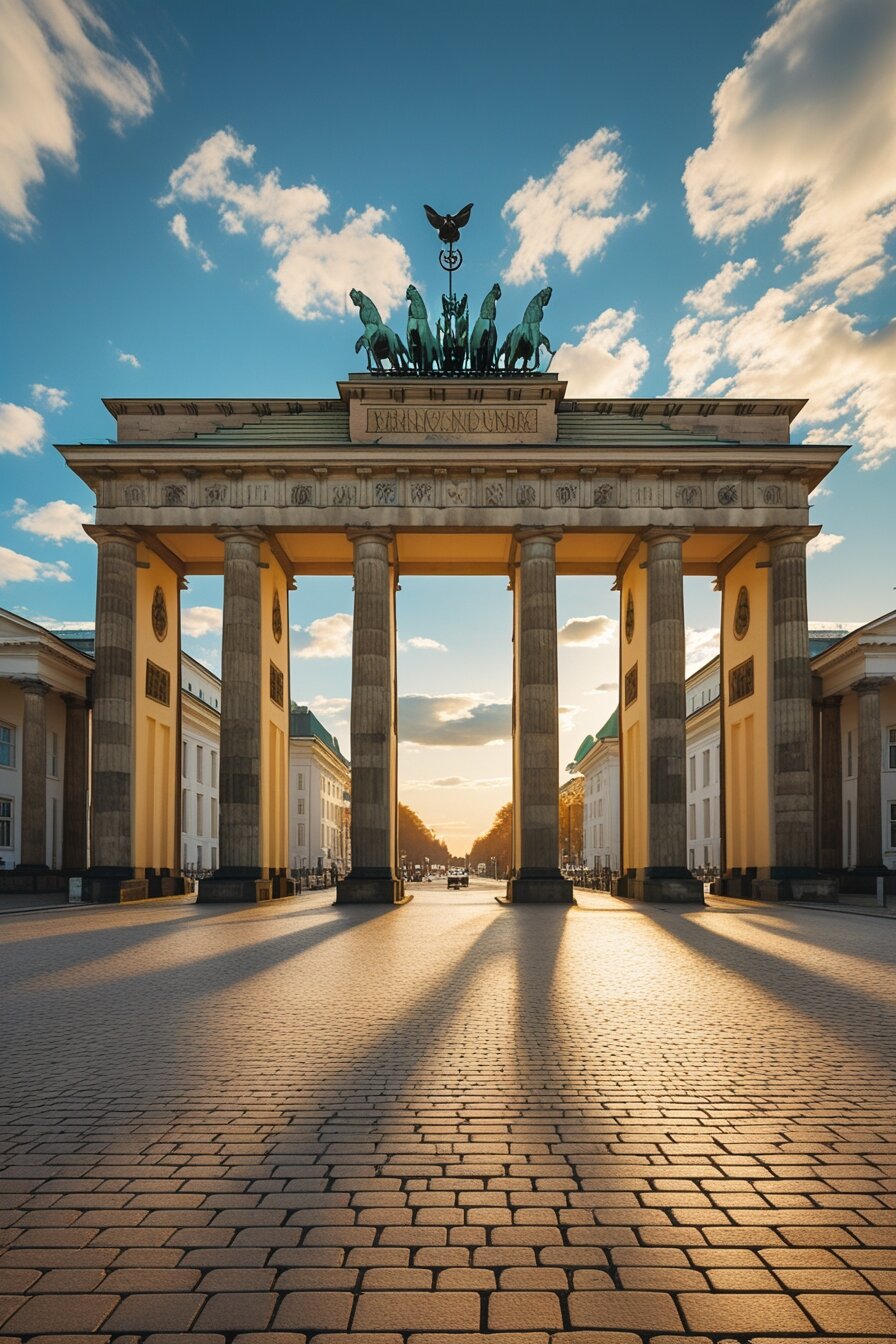
I remember standing in front of the Brandenburg Gate at sunset, feeling goosebumps, realizing I was touching history.
That’s what Berlin does to you.
It makes you feel things.
Here are the iconic spots that absolutely deserve your time and attention.
Brandenburg Gate

The Brandenburg Gate isn’t just a landmark—it’s a symbol of everything Berlin has survived and become.
I stood there my first morning in the city, coffee in hand, just staring.
This neoclassical monument has witnessed wars, division, and reunification.
You can feel the weight of all that history when you stand beneath those massive columns.
It’s free to visit, which I love, and it’s stunning at any time of day.
But early morning or late evening?
Chef’s kiss.
The light hits the gate in this magical way, and the crowds thin out, giving you space to really absorb it.
I recommend walking through the gate from both sides.
There’s something powerful about that simple act—crossing through a structure that people couldn’t cross for decades.
Pariser Platz, the square surrounding it, is beautiful too, with elegant buildings and a peaceful vibe.
Bring your camera, but also put it down for a minute.
Just stand there.
Let yourself feel the significance.
I’m not usually the emotional type, but this place got me.
The gate is especially beautiful when lit up at night, glowing against the dark Berlin sky.
It’s one of those spots that looks incredible in photos but feels even better in person.
East Side Gallery

The East Side Gallery is hands down my favorite outdoor art experience in Berlin.
It’s the longest remaining section of the Berlin Wall, now covered in vibrant murals from artists around the world.
Walking along this 1.3-kilometer stretch feels like stepping into a living, breathing history lesson.
The famous “Fraternal Kiss” mural between Brezhnev and Honecker always stops people in their tracks.
I’ve seen it dozens of times, and it still hits different every time.
What I love most is how the art transforms something so painful into something hopeful and colorful.
Each mural tells its own story—some political, some whimsical, all meaningful.
Go in the late afternoon when the light is soft and golden.
The colors of the murals pop even more.
It’s free to walk along, which makes it accessible to everyone.
Take your time here.
Don’t just snap photos and run.
Read the artists’ names, notice the details, think about what these paintings represent.
One personal tip: the gallery can get crowded mid-day with tour groups.
If you want a more intimate experience, go early morning or around sunset.
The nearby Spree River adds to the atmosphere—sometimes you’ll see boats floating by while you’re admiring the art.
Bring comfortable shoes because you’ll be walking on cobblestones.
This place reminds me why I fell in love with Berlin’s spirit.

Your Ultimate Caribbean Adventure Awaits!
Discover hidden coves, secret beaches, and the best rum punches in the islands. Your insider’s guide to Caribbean paradise.
Get Your Guide Now$15.99Berlin Wall Memorial

The Berlin Wall Memorial on Bernauer Strasse gave me chills in a way few places have.
This is where you really understand what the divided city felt like.
Unlike the colorful East Side Gallery, this memorial is solemn and thoughtful.
There’s a preserved section of the wall with the “death strip” intact—the no-man’s-land between the two walls.
I stood there imagining families separated overnight, and it broke my heart a little.
The outdoor exhibition includes stories of escape attempts, some successful, many tragic.
The Documentation Center offers a viewing platform where you can look down on the memorial site.
From up there, you get the full scope of how the border system actually worked.
I spent about two hours here, reading every plaques, watching the documentary footage.
It’s heavy, but important.
The Chapel of Reconciliation is a quiet space for reflection.
I’m not religious, but I appreciated the moment of peace it offered.
The memorial is free, which feels right—this history should be accessible to everyone.
Go on a weekday if you can; it’s less crowded and more contemplative.
Bring tissues, honestly.
The personal stories of families torn apart are gutting.
There’s a visitor center with detailed exhibits that add so much context.
This isn’t a quick photo stop—give yourself time to really absorb it.
I left feeling grateful for the freedom we often take for granted.
Museum Island

Museum Island is a UNESCO World Heritage site, and trust me, it earns that title.
Five world-class museums on one small island in the Spree River?
Berlin doesn’t mess around.
The Pergamon Museum was my personal favorite, though it’s partially under renovation.
The ancient architecture inside is mind-blowing.
The Neues Museum houses the famous bust of Nefertiti, and seeing her in person is breathtaking.
Her beauty is haunting and timeless.
I recommend buying a Museum Island pass if you want to visit multiple museums.
It saves money and time.
You could easily spend an entire day here and still not see everything.
The Altes Museum has an incredible collection of Greek and Roman antiquities.
The Alte Nationalgalerie showcases 19th-century art in a building that’s itself a work of art.
The Bode Museum’s sculpture collection is gorgeous, especially if you love classical art.
My hack: go right when the museums open to avoid crowds.
Late afternoons can get packed with tour groups.
The island itself is beautiful to walk around, even if you don’t go inside the museums.
The architecture is stunning, and there are benches along the river where you can just sit and people-watch.
Grab a coffee from a nearby café and enjoy it on the museum steps.
Berlin’s museum scene is world-class, and this island proves it.
Give yourself at least half a day, preferably a full one.
Reichstag Building

The Reichstag Building, home to Germany’s parliament, is an architectural marvel with a view that’ll take your breath away.
That glass dome designed by Norman Foster?
Absolute genius.
You can walk up the spiral ramp inside the dome and see 360-degree views of Berlin.
I went at sunset and watched the city turn golden, then pink, then purple.
It was magical.
But here’s the thing: you need to register in advance online.
Don’t just show up—you won’t get in.
I made that mistake my first trip and was so bummed.
The building itself is steeped in history—it’s seen the rise and fall of empires, wars, and reunification.
Standing inside, you feel the weight of all those years.
The rooftop terrace is free, which I still can’t believe given how incredible it is.
An audio guide is included, and it’s actually really informative without being boring.
It points out landmarks as you walk around the dome.
Go in the evening when the light is softer and the city starts to glow.
The dome represents transparency in government, with the glass allowing citizens to literally look down on their representatives.
I love that symbolism.
Afterward, walk around the government quarter—the modern architecture is impressive.
Book at least a week in advance, especially during tourist season.
This is one of those experiences that stays with you.
Caribbean Paradise Unlocked
From pristine beaches to vibrant local culture, discover the Caribbean’s best-kept secrets with my comprehensive travel guide.
- 120+ Hidden Beach Secrets
- Local Cuisine Guide
- Budget Travel Tips
- Island Hopping Routes
Memorial to the Murdered Jews of Europe

The Memorial to the Murdered Jews of Europe, also called the Holocaust Memorial, is one of the most emotionally powerful spaces I’ve ever walked through.
It’s right in the heart of Berlin, yet it feels completely removed from the city around it.
The installation consists of 2,711 concrete slabs arranged in a grid pattern.
From the outside, they look uniform, but as you walk in, the ground undulates and the slabs grow taller.
You quickly feel disoriented and isolated.
That’s intentional.
There’s no single “correct” way to experience it.
Some people walk quietly through, others sit on the slabs and reflect.
I wandered through slowly, feeling the weight of what this represents.
The underground Information Room provides historical context, personal stories, and names.
I recommend visiting it—it adds crucial meaning to the memorial above.
The room of names, where victims’ stories are shared, absolutely destroyed me.
This isn’t a cheerful stop on your Berlin trip, but it’s essential.
It’s a reminder, a memorial, a space to confront history honestly.
Go alone if you can, or with someone you can be silent with.
It’s free and open 24/7, which I think is important—grief and remembrance don’t keep business hours.
Early morning is the most peaceful time to visit.
Give yourself at least an hour, more if you visit the Information Room.
Checkpoint Charlie

Checkpoint Charlie is one of those places everyone’s heard of, and honestly, it’s worth visiting even though it’s touristy.
This was the most famous border crossing between East and West Berlin during the Cold War.
Standing at that intersection, I tried to imagine what it felt like when this was the line between two worlds.
The replica guardhouse and actors dressed as soldiers feel a bit theme-park-ish, I’ll admit.
But the history here is real and fascinating.
The nearby museum—Checkpoint Charlie Museum—is packed with stories of creative and daring escape attempts.
Hidden compartments in cars, tunnels, hot air balloons—people risked everything for freedom.
That part gave me chills.
The outdoor exhibition with historical photos helps you visualize what this crossing actually looked like.
My recommendation: visit early morning before the crowds and street performers take over.
It gets circus-like by midday.
There’s a Starbucks nearby where you can grab coffee and process everything.
Sometimes you need a minute after absorbing heavy history.
The museum isn’t free, but I think it’s worth the entrance fee for the escape stories alone.
The location is central, so it’s easy to combine with other nearby attractions.
Yes, it’s commercialized, but the history underneath all that tourist stuff is genuinely important.
Take your photos, but also read the plaques.
This crossing point witnessed some of the Cold War’s most tense moments.
It’s a reminder of how recently Berlin was divided.
Alexanderplatz & TV Tower

Alexanderplatz is Berlin’s bustling central square, and that iconic TV Tower piercing the sky?
You can see it from basically everywhere in the city.
I’m obsessed with that tower.
It’s retro, it’s communist-era architecture, and it’s oddly beautiful.
You can go up to the observation deck at 203 meters and see the entire city spread out below you.
On clear days, the view stretches for miles.
There’s also a rotating restaurant up there, which is touristy but fun.
I had breakfast there once, slowly spinning above Berlin with coffee and pastries.
Worth it.
Book your tower tickets online in advance to skip the lines—they can be brutal.
Alexanderplatz itself is busy and commercial, full of shops and people rushing everywhere.
It’s not the prettiest square, but it’s got energy.
The World Clock is a quirky landmark that’s fun for photos.
I like grabbing currywurst from one of the nearby stands and people-watching from a bench.
The square was the heart of East Berlin, and you can still feel that socialist-era architecture vibe.
Nearby, you’ll find the massive shopping center if you need to escape rain or cold.
The TV Tower is especially stunning at night when it’s all lit up.
Go at sunset for the best of both worlds—daylight views transitioning into the city lights.
This area gets crowded, but that’s part of its charm.
Your Ultimate Caribbean Adventure Awaits!
Discover hidden coves, secret beaches, and the best rum punches in the islands. Your insider’s guide to Caribbean paradise.
Get Your Guide Now$15.99Tiergarten Park

Tiergarten is Berlin’s green heart, and I’ve spent countless peaceful hours wandering through this massive urban park.
It’s over 500 acres of trees, paths, meadows, and quiet spots.
When city energy gets overwhelming, this is where I escape.
The park has this beautiful, wild quality—it’s not overly manicured, which gives it character.
In spring, everything blooms and it’s absolutely magical.
In summer, Berliners sprawl on the grass, having picnics and soaking up sun.
In fall, the leaves turn golden and the whole park glows.
Even in winter, there’s something peaceful about walking through bare trees with frost on the ground.
The Victory Column stands in the center, and you can climb it for views over the park and city.
I’ve done it twice—those stairs are no joke, but the view is worth sore legs.
There are beer gardens scattered throughout where you can grab a drink and relax.
The park has memorials, including the Soviet War Memorial, which is impressive and moving.
My favorite thing is just wandering without a map.
Getting a little lost in Tiergarten is the best way to experience it.
Bring a blanket and a book if the weather’s nice.
Pack snacks.
There are several entrances, so it’s easy to access from different parts of the city.
Potsdamer Platz

Potsdamer Platz is modern Berlin at its finest—sleek skyscrapers, shopping, entertainment, and history all mixed together.
This area was completely destroyed in WWII and sat as wasteland during the division.
Now it’s this vibrant, futuristic district that shows Berlin’s resilience and reinvention.
The Sony Center is the architectural centerpiece, with that incredible glass roof that lights up at night.
I love grabbing coffee there and just looking up at the geometric design.
There’s a small section of the Berlin Wall preserved here, a reminder of what this space used to represent.
The contrast between old and new is striking.
The Deutsche Kinemathek museum is great if you love film—it covers German cinema history.
There are tons of restaurants and cafes, from international chains to local spots.
I often come here for movies at the massive cinema complex.
The public square hosts events and markets throughout the year, especially beautiful Christmas markets in winter.
The area feels very different from historic Berlin—it’s shiny, corporate, modern.
Some people don’t love that, but I appreciate the diversity it brings.
It shows that Berlin isn’t stuck in the past.
The Kollhoff Tower observation deck offers another great city view if you don’t want to do the TV Tower.
It’s less crowded and more affordable.
This area is especially beautiful at night when everything’s illuminated.
The Potsdamer Platz Arkaden mall is perfect for rainy days.
Gendarmenmarkt

Gendarmenmarkt is, hands down, the most beautiful square in Berlin.
I could sit here for hours just absorbing the architectural perfection.
The square features three stunning buildings: the French Cathedral, the German Cathedral, and the Konzerthaus concert hall in the center.
The symmetry is absolutely gorgeous.
I’ve been here in every season, and it’s stunning year-round.
Summer brings outdoor cafés where you can sit with wine and soak in the atmosphere.
Winter brings the most elegant Christmas market I’ve ever experienced.
Unlike the massive, touristy Christmas markets, this one feels sophisticated and magical.
The square was modeled after Italian piazzas, and you can feel that European elegance.
Climb up the French Cathedral’s tower for views over the square and city.
It’s a bit of a climb, but not too strenuous.
The German Cathedral houses an exhibition about German parliamentary history, which is surprisingly interesting.
The Konzerthaus hosts concerts—I saw a classical performance there once and the acoustics were incredible.
There are excellent restaurants around the square, though they’re pricier than other neighborhoods.
For a special dinner, though, it’s perfect.
The square is less crowded than major tourist spots, which makes it feel like a local secret.
Early morning here is peaceful and perfect for photos without people.
I recommend just sitting on the steps of the Konzerthaus and people-watching.
This square makes you feel like you’re in a different era.
Caribbean Paradise Unlocked
From pristine beaches to vibrant local culture, discover the Caribbean’s best-kept secrets with my comprehensive travel guide.
- 120+ Hidden Beach Secrets
- Local Cuisine Guide
- Budget Travel Tips
- Island Hopping Routes
Berlin Cathedral

Berlin Cathedral, or Berliner Dom, is absolutely magnificent with that huge copper dome dominating the skyline.
It sits right on Museum Island, impossible to miss.
The exterior is impressive, but going inside is where the real beauty reveals itself.
The interior is ornate, with stunning mosaics, elaborate altars, and incredible architecture.
I’m not particularly religious, but churches like this move me.
The dome climb is challenging—270 steps—but oh my goodness, the view from the top.
You can see across Museum Island, the Spree River, and the entire city center.
I was breathing hard by the top, but it was absolutely worth it.
The cathedral also has a crypt where Prussian royals are buried.
It’s fascinating if you’re into history.
The organ concerts held here are supposed to be amazing, though I haven’t attended one yet.
It’s on my list.
There’s an entrance fee, which some people grumble about, but maintaining a building this massive isn’t cheap.
The cathedral square out front is a nice spot to rest and take photos.
In summer, the lawn in front (Lustgarten) fills with people relaxing in the sun.
The cathedral looks especially beautiful at night when it’s illuminated.
I recommend combining this with your Museum Island visit since it’s right there.
Give yourself about an hour—more if you climb the dome and explore the crypt.
The baroque and neo-Renaissance details are extraordinary.
This cathedral represents Berlin’s royal and religious history beautifully.